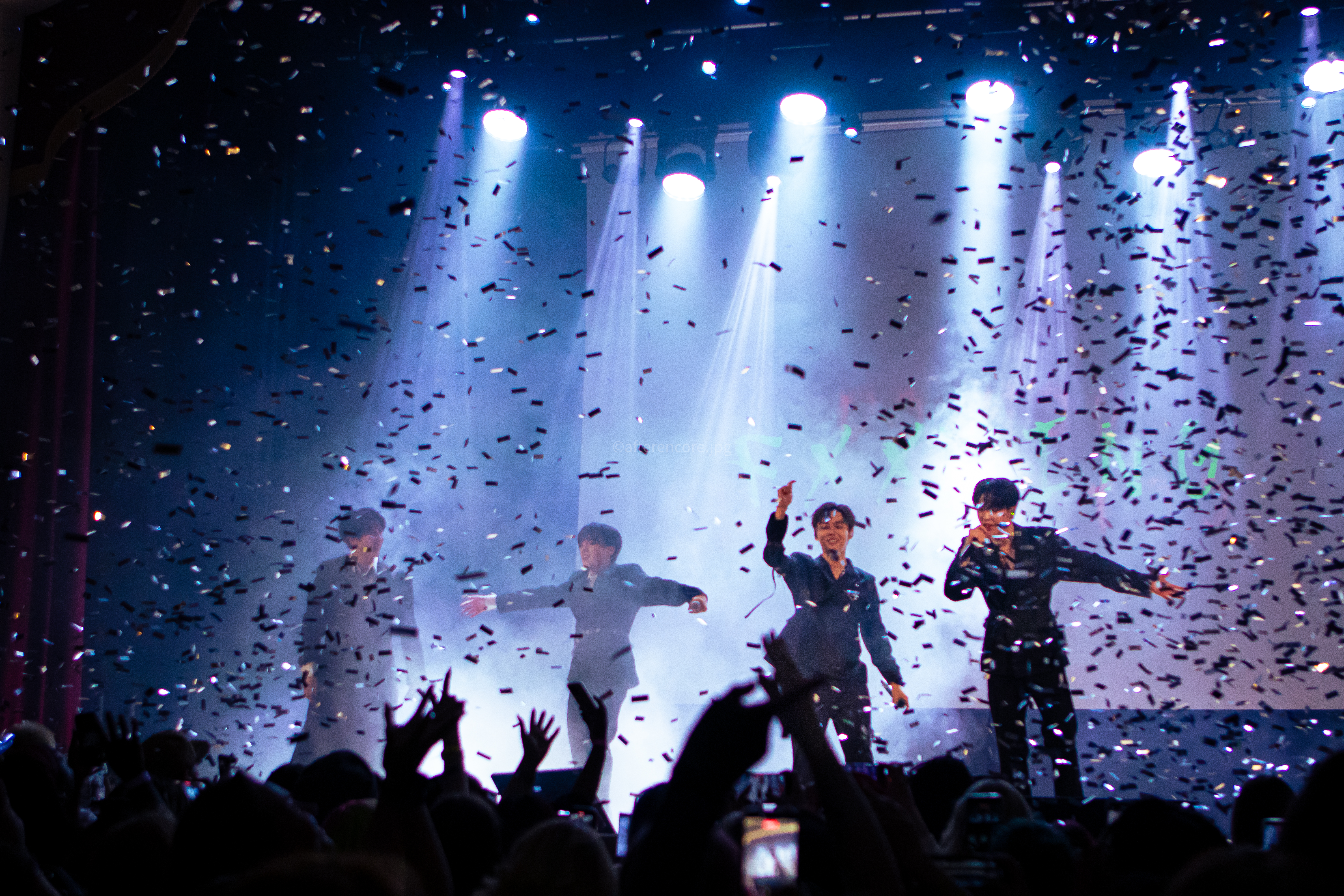

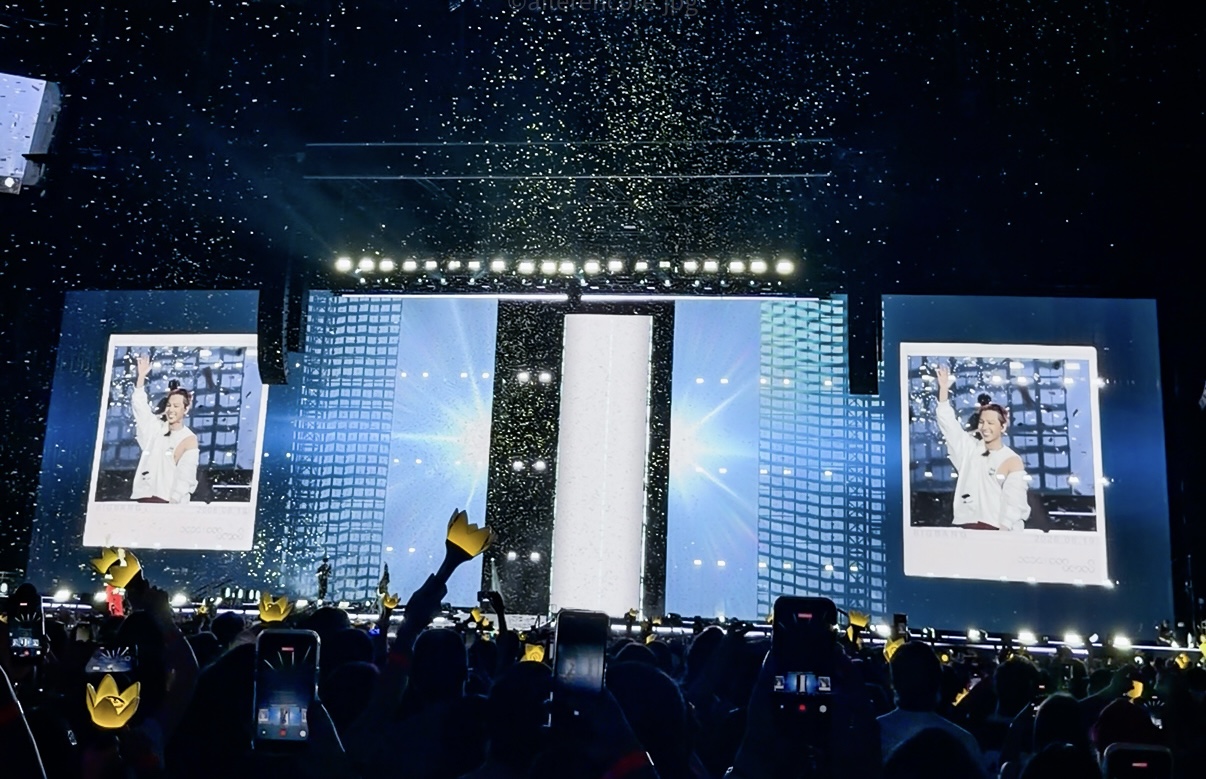
Fourteen years after their last London concert, BIGBANG returned to the city as part of their XX : COSMOS tour, bringing with them a setlist that has helped shape K-pop across generations. From iconic anthems and deeply nostalgic ballads to individual solo performances, the group delivered a show that celebrated their legacy while reminding audiences of their enduring impact.
Opening with Fantastic Baby, BIGBANG wasted no time in making their return feel historic. The instantly recognisable track provided an explosive introduction as one of the group’s defining songs, it was a fitting choice to begin a concert that celebrated their history and the music that continues to resonate with fans around the world.
Visually, the production immediately established the scale of the show. The expansive stage, screen effects and large group of backup dancers created a spectacle that felt full and immersive, with each element contributing to the atmosphere rather than overwhelming the performers. Their styling also complemented the production, with distinctive outfits and hair colours adding to the group’s stage presence.
Hands Up continued the momentum, reinforcing the energy of the opening while showcasing the scale of the performance. The choreography, staging and visual effects worked together to create the concert experience. Despite the size of the stage, the production never felt empty.
For a group whose music has influenced generations of K-pop artists and listeners, hearing these songs performed live carried a significance that extended beyond nostalgia alone. BIGBANG’s music has become the history of the genre, with tracks that remain instantly recognisable years after their release. In London, those songs offered a powerful reminder of the group’s lasting influence and the connection they continue to share with their audience.
That feeling became particularly apparent during Loser. As the members walked along the barricade, interacting with fans at close range, the performance created a more personal connection between the group and the audience. The crowd’s enthusiastic response added another layer to the moment, turning the song into a shared experience.
The atmosphere deepened further with performances of Bae Bae and Haru Haru, with the audience singing along in Korean. The members delivered a performance that allowed the song itself to take centre stage, creating a contrast to the high-energy of the opening.
For many fans, Haru Haru represents a defining piece of K-pop’s history. Hearing it performed live made a moment that felt both intimate and groundbreaking. It was a reminder of just how far BIGBANG’s music has travelled and how deeply it has connected with listeners across different generations.
BIGBANG could fill a stage with explosive energy, but they could also bring an entire venue together through a song that had remained meaningful to fans for years.
The solo stages offered another perspective on BIGBANG’s artistry, giving each member the opportunity to showcase a distinct musical identity while highlighting the qualities that make them compelling performers on their own.
Daesung brought a particularly infectious energy to his solo segment. His happiness at being on stage was clear throughout, creating an atmosphere that felt warm, spontaneous and full of personality. Through his interactions with the audience and invitations for fans to sing along, he established an easy connection with the crowd, making the solo performances feel less like a break from the group set and more like an opportunity to connect with each member specifically.
He even attempted Freddie Mercury’s iconic “call and response” routine, getting the audience involved which added to the lively atmosphere.
With Daesung’s trot influences, his set offered a contrast to the musical styles explored by the other members, demonstrating the sides of BIGBANG’s individual artistic identities.
Taeyang’s solo stage brought a different kind of intensity. With performances including Ringa Linga, he revisited a track that remains a significant part of his solo discography, delivering a moment that felt particularly exciting in a live setting. His performance style gave the songs their own identity while maintaining the energy established throughout the concert.
His more recent track Live Fast Die Slow also stood out for the way it incorporated the audience into the performance by walking along the barricade and encouraging fans to sing. Across his solo segment, his stage presence and ability to engage the crowd reinforced his individuality as a performer.
Then came G-Dragon.
As one of K-pop’s most recognisable and influential figures, his appearance on stage carried a significance. Watching him perform live was a moment that felt surreal on its own, particularly for fans who have followed his music and career over the years.
His solo segment included Crooked, a particularly meaningful highlight. The song’s connection to London added another dimension to the performance, with its music video having been filmed in the city in 2013. Hearing it performed in London created a sense of connection between the song’s history and the present moment. G-Dragon’s performance showcased the talent that has defined him as an artist with his stage presence, musical identity and music.
Together, the solo stages highlighted the different qualities each member brings to BIGBANG.
Following the solo performances, BIGBANG returned to the group set with Bang Bang Bang, delivering one of the evening’s most explosive moments.
As one of K-pop’s most recognisable tracks, hearing it live was a reminder of its enduring impact, with the crowd’s reaction reflecting the excitement surrounding a song that continues to hold a significant place in K-pop history.
The energy continued through Sober and We Like 2 Party, bringing a more carefree atmosphere. These performances allowed the group to lean into the fun and spontaneity of their music, with the audience contributing to the atmosphere.
What made these moments particularly effective was the contrast between the songs’ different moods. BIGBANG moved from high-impact to more relaxed tracks, each song offered a different way to experience the group.
Home Sweet Home carried a different kind of nostalgia. Despite being a more recent release, the song evoked the excitement surrounding G-Dragon’s comeback from a few years ago. Its place in the set was particularly meaningful in the context of BIGBANG’s reunion, and seeing them perform together again.
Throughout the concert, the members spoke about how happy they were to be back together as a group. With G-Dragon specifically expressing his desire to bring back the group’s golden days.
Rather than simply celebrating the past, these moments acknowledged the history that brought the group to this point while looking towards what their continued journey together could mean. Their return to London was not just an opportunity to revisit familiar songs, but it was also a celebration of the group itself and what they have endured throughout their career.
As the concert moved into its encore, BIGBANG continued to draw on the emotional connection from the night.
Flower Road was a particularly memorable inclusion, offering a moment that felt especially meaningful within the context of the group’s return. Its unexpected appearance added another layer to an already nostalgic setlist.
The show concluded with Still Life, bringing the concert to a close. Following an evening filled with explosive anthems, large-scale production and performances, the final song offered an opportunity to take in the significance of the group’s return to London
After years away from the London stage, BIGBANG had brought together a list of songs that defined an era of K-pop, alongside newer material that reflected the group’s most recent chapter.
Their return to London offered a rare opportunity to experience that legacy in person, bringing together nostalgia, celebration and the excitement of seeing the members reunite on stage. For a group whose music has left such a lasting mark on the genre, the night served as a powerful reminder of why BIGBANG remain such a significant part of K-pop’s story.

Leave a Reply