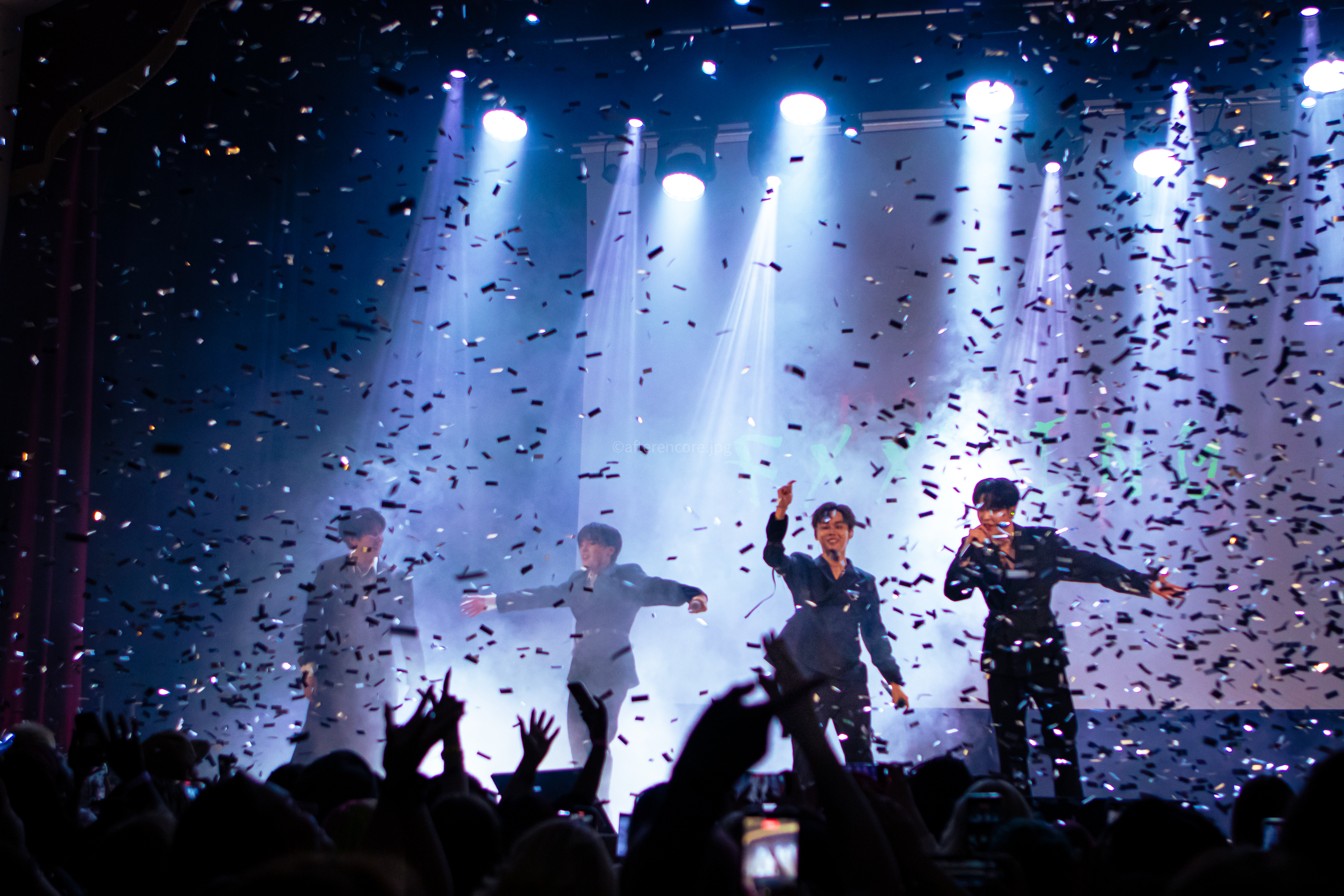

For decades, Music Bank has stood as one of the most recognisable names in Korean music broadcasting, connecting artists with audiences both domestically and around the world. But behind the stages, performances and global reach is a team working to continually evolve what the Music Bank experience can be.
For this exclusive conversation with The Chord Chat, we sit down with the CEOs behind Music Bank Barcelona to discuss the story behind the brand, their approach to the rapidly changing music industry, the growing influence of Korean entertainment internationally, and their vision for what comes next.
Korean Power and sonde3 CEO Germán Quimasó and Korean power and La rock entertainment CEO Marcos Calvo share what bringing an event like Music Bank to Europe looks like behind the scenes.
TCC Holly: How did the opportunity to organise Music Bank in Barcelona come about?
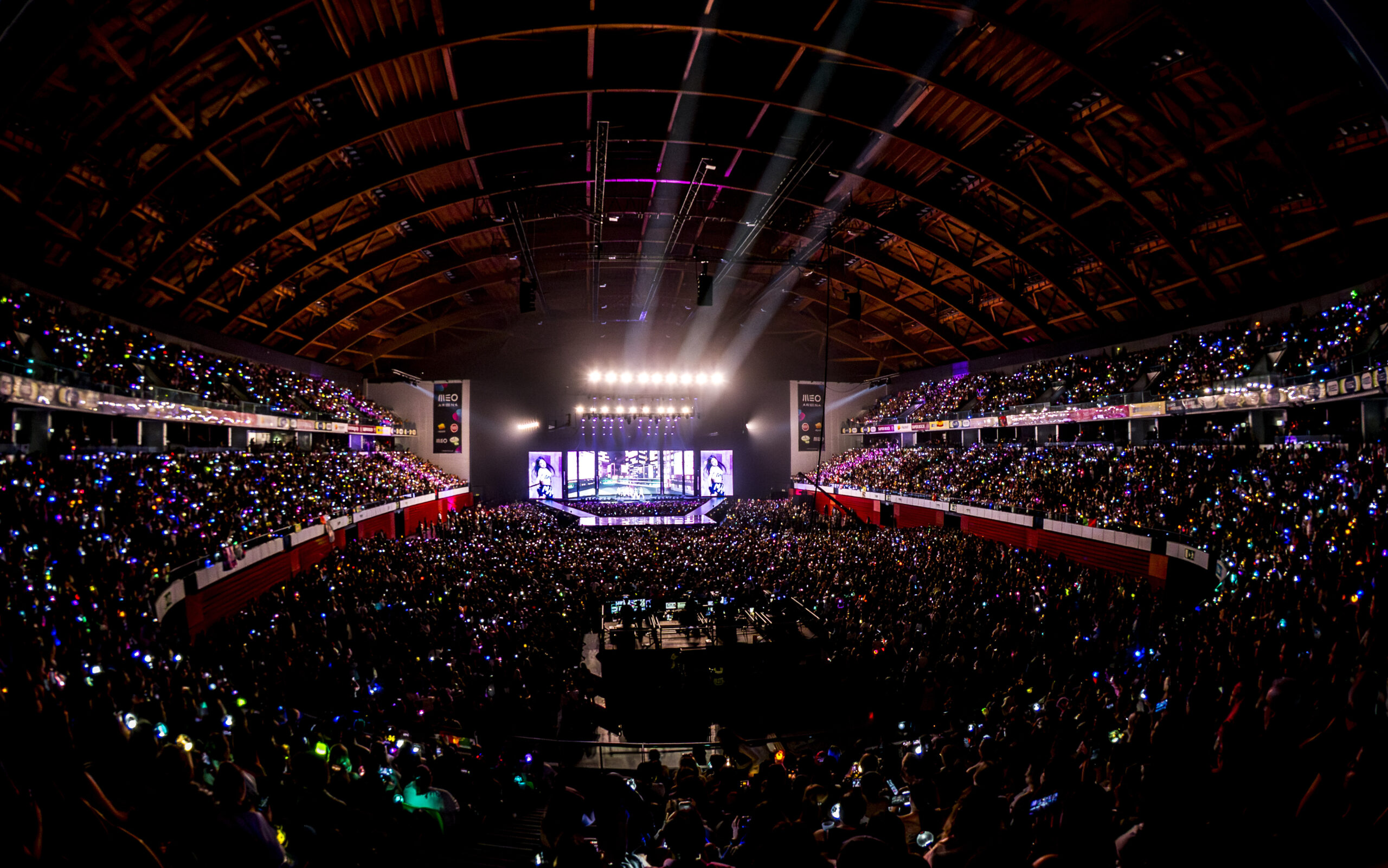
Marcos Calvo: Last year, we had the opportunity to work with KBS on the first Music Bank we organised in Europe, in Lisbon. This opportunity was made possible thanks to our long-standing relationship and collaboration with Sonde3, which has been a key partner for us throughout this process. After Lisbon, the relationship continued to develop, and this year we are taking the project to Barcelona. For us, that continuity is very significant.
Going from Lisbon to Barcelona means not only organising a second edition, but also taking everything we learned from the firstexperience and applying it to an even bigger and more ambitious project.Barcelona was a very natural next step. It is one of Europe’s most international cities, it has the infrastructure to host an event of this scale and, importantly, it gives us the opportunity to connect Music Bank with an even broader European audience.
From my perspective, our relationship with KBS is therefore one of the key elements behind the project. We are building something progressively, year after year, with the objective of bringing high-level Korean entertainment to Europe and establishing a strong andsustainable presence for these productions in the European market.Music Bank Barcelona is the second chapter of that journey, and we are very excited aboutwhat we can build from here.
Germán Quimasó: Our relationship with Music Bank did not begin in Barcelona. It is the result of several years of work by Sonde3 in Korea and, in particular, of the relationship we have built with KBS. The first year was essentially about learning. We spent time understanding the Korean industry, welcomed KBS to Spain on several occasions, travelled to Seoul ourselves and invested a great deal of time in understanding an industry with its own codes and a way of working that is very different from Europe.
In our second year, we took a major step by bringing Music Bank to Madrid. In our third year, we took Music Bank to Lisbon. And now, in our fourth year, we wanted to continue growing and find a city that would allow us to take another step forward.
Barcelona had practically everything we were looking for.So for us, Music Bank Barcelona is not an opportunity that suddenly appeared. It is the next chapter in a relationship and a project that we have been building for four years.
TCC Emily: Why was Barcelona chosen as the host city for Music Bank 2026 ?
Germán Quimasó: Barcelona has exceptional conditions for an international K-pop event. First of all, there is the Estadi Olímpic, which is a spectacular venue and allows us to think about Music Bank on a genuinely large scale. But the decision goes far beyond the stadium.
Barcelona is very close to France, extremely well connected by road and rail with the rest of Spain, and has an international airport with connections across Europe and much of the world. It is also a cosmopolitan, highly attractive tourist destination.We do not want people to think only about coming to an event. We want a fan in Lisbon, Paris, Berlin, Madrid, Seoul, New York or any other city to think: “This weekend, I’m going to Barcelona to experience Music Bank with Korean Power.”There was also another important factor: Music Bank had never been to Barcelona before.
We really liked the idea of taking it to a new city and creating something special there.
Marcos Calvo: Barcelona has something that very few European cities can offer: global recognition combined with an enormous capacity to attract international visitors. For an event like Music Bank, that is extremely important. We are not looking at Barcelonasimply as a Spanish market. We are looking at it as a European destination.The Estadi Olímpic gives the event the scale that Music Bank deserves, but the city itself is equally important.
Barcelona has an international airport, excellent connections, a strong tourism ecosystem and an audience accustomed to major cultural and musical events. From a promoter’s perspective, that combination is very powerful.We also believe there is value in taking Music Bank to a city where the format has not previously been experienced.
It creates a sense of discovery for fans and gives us the opportunity to build an edition with its own personality.
TCC Holly: What makes this edition of Music Bank unique compared to previous international shows?
Marcos Calvo: Every international edition has to adapt to its environment, and Barcelona gives us an extraordinary framework to do that.For us, one of the most exciting aspects is the possibility of bringing together a truly international audience. We expect Barcelona to become a meeting point not only for Spanish fans, but also for people travelling from different parts of Europe.That changes the way we think about the event. The objective is not simply to fill a stadium for one night.
We want the event to become part of the cultural and entertainment calendar of Barcelona and create an experience that people remember beyond the performances themselves.There is also a very important emotional factor. For many fans, Music Bank will be a major trip. They will travel, stay in hotels, meet other fans and experience Barcelona.
We want to respect the importance of that journey and make sure the event lives up to it.
Germán Quimasó: Every Music Bank has its own personality because every host city has its own identity.Barcelona offers a combination that is very difficult to replicate: an Olympic stadium, aninternationally recognised city, enormous tourist appeal and a geographical position thatallows us to attract fans not only from Spain but from across Europe and beyond.
Our intention is to take full advantage of that and make Music Bank Barcelona about morethan just the hours of the show itself. We want people to feel that, for that weekend, Barcelona becomes one of the major meetingpoints for K-pop fans in Europe. I think that is one of the biggest opportunities this edition gives us.
TCC Emily: What does hosting an event like this mean for the growth of K-pop in Europe?
Germán Quimasó: It demonstrates something that only a few years ago some people still questioned: K-pop in Europe is not a temporary trend.There is an enormous, young and highly active community, and it is also extraordinarilyinternational.
Fans are willing to travel between countries to see their artists and experiencethese events.Events like the ones we organise through Korean Power help Korean companies and artistssee Europe as a real and strategic market, rather than simply an occasional stop on a world tour. I believe we are still at a relatively early stage. There is a huge amount of room for growth.
Marcos Calvo: I think we have moved beyond the phase where K-pop needs to prove that it has an audience in Europe. The audience is already there.What we are seeing now is the emergence of a real entertainment market around Koreanmusic. Fans are travelling internationally, following multiple artists and consuming Koreanentertainment continuously through digital platforms. That creates a major opportunity for promoters like us.
The next step is to professionalise and expand the ecosystem: larger shows, betterproductions, stronger partnerships, more international collaborations and, above all, adeeper understanding of what European audiences expect.
Music Bank is important because it demonstrates that Korean entertainment can operate atthe highest level of the European live entertainment market. And I believe we are still at the beginning of that process.
TCC Holly: What are some of the biggest challenges when producing a K-pop event ?
Marcos Calvo: The first challenge is scale.A production of this level involves international artists, different agencies, technical teams,television production, logistics, security, hospitality, transportation and hundreds of peopleworking according to very precise schedules.But there is another challenge that I consider equally important: expectations. K-pop fans are exceptionally knowledgeable. They know the artists, their productions, theirprevious shows and what happens in other international markets.
They compare experiences globally.That means that being a promoter today is not simply about putting on a concert. You haveto understand the audience and deliver a complete experience. At Korean Power, that is something we take very seriously. The objective is to combine international production standards with a very strong understanding of the local market.
Germán Quimasó: The complexity is enormous because you are not simply producing a concert.You are working with multiple artists, Korean and European teams, television production,technical production, international travel, translators, hotels, transportation, security,extremely precise schedules and the specific requirements of every artist. There is also an additional challenge: you are bringing together two different ways of working.That is why having a presence in Seoul has been so important for us.
We have someone permanently based there, which makes communication with KBS, the agencies and the Korean K-pop ecosystem much more direct and fluid. After four years, we have learned a huge amount. But the more you understand this kind of production, the more aware you become of just how complex it really is.
TCC Emily : What part of the planning process do fans rarely get to see?
Germán Quimasó: Probably the sheer amount of work that takes place over many months so that, in the end, everything appears simple for a few hours.When an artist walks onto the stage, there are hundreds of decisions behind that momentthat the audience will never see: flights, hotel rooms, transportation, dressing rooms,rehearsals, accreditation, security, schedules, technical equipment, permits and coordinationbetween different countries and teams.And that is exactly how it should be.
If the audience does not notice all that complexity and can simply enjoy the show, it means we have done our job properly.
Marcos Calvo: Probably the amount of decision-making that happens long before the audience sees anything.There are months of work behind a single event date.You have to coordinate artists, agencies, production, venue operations, ticketing,transportation, accommodation, security, communications and many other areas.And all of those decisions are interconnected.Something as simple as changing a rehearsal schedule can have consequences fortransportation, technical production, artist hospitality and venue operations.
What people see is the final show. What they don’t see is the enormous amount of planning required to make that show feel effortless.For me, that is one of the defining characteristics of a successful live event: the audienceshould feel the excitement, not the complexity behind it.
TCC Holly : Music Bank is a large-scale production. Could you walk us through theprocess of organising an event of this size?
Marcos Calvo: We start by looking at the project as a complete ecosystem rather than simply as a concert.There is the artistic dimension, of course, but there is also the venue, the audience profile,international mobility, ticketing strategy, hospitality, production, security, communications andthe commercial side of the project.As promoters, one of our responsibilities is to make sure those different areas are aligned.Then there is the international coordination.
A project like Music Bank brings together teamsand companies from different countries, each with their own processes and requirements. The key is creating a common working structure.At Korean Power, we put a lot of emphasis on planning because large-scale events leavevery little room for improvisation. You can be flexible when circumstances change, but flexibility only works when the foundations are extremely solid.
Ultimately, the quality of the event comes from thousands of small decisions being made correctly.
Germán Quimasó: It begins many months before the event, with several processes moving forward simultaneously.First, our team, led by Isabel Sánchez, works on the artist selection and designs a lineupwith the host city and the stadium or arena in mind. We analyse the music landscape andwhere each artist stands at that particular moment. We need headliners, emerging artistsand, as far as possible, we also try to maintain gender balance within the lineup.
Secondly, and equally importantly, there is KBS, which manages the television side of MusicBank and has its own relationships with the artists’ agencies. Then there are the agencies and the artists’ teams themselves, with their touring schedulesand their plans for the international development of their artists. Once all of those elements come together, and the different parties’ plans and interestsalign, the full local production begins: stadium, stage, sound, lighting, video, security,ticketing, mobility, hotels, transportation, permits, communications, sponsors and the overallaudience experience.
The real challenge is not simply doing each of those individual areas well. It is making sure they all work together and arrive at exactly the same point on the day of the event. A Music Bank involves a huge number of people from different countries. Coordination is probably the single most important part of the entire process.
TCC Emily : How do you balance creating a memorable experience for both theartists and the fans?
Germán Quimasó: I think the two things are directly connected.If an artist arrives in Barcelona and finds a professional organisation, transportation thatworks well and is fast and comfortable, accommodation where they can genuinely rest, andthen a major production with a great stage and a technical team capable of delivering anevent of this scale while understanding their needs, they are going to be in the best possible position to give a great performance.Exactly the same applies to the fans.Their experience begins long before the first artist appears on stage.
It starts when they buytheir ticket and receive the right information, when they organise their journey, when theyarrive at the stadium and when they enter the venue. Our job is to take care of that entire journey so that, when the artists and the audience finally meet, both are in the best possible conditions to enjoy the experience.
Marcos Calvo: A great artist experience contributes directly to a great audience experience.If artists feel that everything around them is professional, well organised and designed toallow them to perform at their best, that energy reaches the audience.At the same time, we have to remember that the fan experience begins much earlier thanthe concert. It begins when someone decides to buy a ticket.
Then comes the journey, the hotel, the arrival in Barcelona, transportation, access to the venue, security and everything that happens before the first song.As a promoter, our responsibility is to manage that entire journey. For Korean Power, the goal is simple: we want the fan to feel that every part of the experience has been considered.
TCC Holly : How do you approach curating the lineup for an event like Music Bank?
Marcos Calvo: Music Bank has a very particular artistic identity and the Korean side plays a fundamental role in the selection process.From the promoter’s perspective, however, it is essential to understand how that lineupconnects with the European audience. We look at the strength of the artists, their current relevance, their fan communities and the overall balance of the show. A lineup should create different moments throughout the night. You need artists who can generate immediate excitement, but also artists who can introduce audiences to something new.
There is also an important strategic dimension. The ideal lineup is one that makes a fan in Spain want to attend, but also gives someone in France, Portugal, Italy, Germany or the UK a reason to travel to Barcelona. That is one of the opportunities we see in this edition.
Germán Quimasó: Music Bank has a very particular structure. KBS plays a fundamental role in shaping the artistic side of the event and works directly with the Korean agencies.From our side, we contribute our knowledge of the local and European market, audiencebehaviour and which artists have particular relevance here.We work to build a lineup that is both exciting and realistic for the country and city hostingthe event.
We want the event to succeed, we want the venue to be full of fans and everydecision has to be made with the aim of creating the best possible experience for both artistsand audience.The final objective is to create a strong, balanced lineup that represents different stages andaudiences within K-pop and gives someone a genuine reason to travel hundreds, or eventhousands of kilometres to experience Music Bank.
TCC Emily: What can attendees expect from this year’s production?
Germán Quimasó: Above all, scale.We are talking about the Estadi Olímpic in Barcelona, and we want the show to match boththe size of the venue and the importance of the event. Music Bank also has a very particular quality: it is not simply a sequence of concerts. It has a television language of its own, hosts, collaborations, specially created content and moments designed specifically for each edition.
We want people to enter the stadium and immediately feel that they are attending one of themajor international K-pop events of the year.
Marcos Calvo: I think fans can expect an edition that is designed to feel truly special for Barcelona.We are bringing Music Bank to one of the most iconic venues in the city, the Estadi Olímpic,and that gives us the opportunity to create a production with a very different scale andatmosphere.But for us, it is not only about the size of the stage or the number of people in the stadium.What matters is creating those moments that make a Music Bank different from aconventional concert — the interaction between artists, the visual production, thecollaborations and the feeling of watching something that has been created specifically forthis event.We also want the audience to feel the international character of the occasion. Fans arecoming from Spain and from many other European countries, and we want everyone to feelthat they are part of a major European K-pop event.
At Korean Power, we have worked very closely on every aspect of the experience because we know that, for many fans, this is not simply a concert. It is a trip, an opportunity to seetheir favourite artists and, for many of them, their first Music Bank in Barcelona. Our goal is that when the lights go down and the show begins, everyone in the stadium feelsthat they are experiencing something truly unique.
TCC Emily : Are there any surprises or special elements fans should look forward to?
Marcos Calvo : We want this event to have its own identity.Barcelona has a very strong personality as a city, and we believe there is an opportunity toreflect some of that energy in the overall experience. So, yes, fans should expect some things they will not be able to experience in exactly thesame way anywhere else.
Germán Quimasó: Yes, of course. We are talking about Music Bank.But we are not going to reveal the surprises in an interview, because then they would stopbeing surprises. What I can say is that we are working to give Barcelona its own identity within the international history of Music Bank. There will be things that can only be experienced there, and I think that is precisely one of the reasons why it will be worth coming.
TCC Holly : How important is fan feedback when planning events like this?
Germán Quimasó: Extremely important. K-pop probably has one of the most active and organised fan communities in music today.We listen to what fans say. We look at how they buy tickets, where they travel from, whichartists they follow and also what they criticise about events. We try to make their experience as good as possible.
We want them to enjoy the journey and feel part of the event from the moment of the first announcement, months before the actual show takes place.For us, the experience does not begin when the doors of the stadium open. It begins muchearlier.
Marcos Calvo: It is essential.The K-pop audience is one of the most engaged audiences in the entertainment industry.Fans communicate constantly, share information, analyse shows and are very clear aboutwhat they value.For a promoter, that is extremely useful.
We pay attention to what fans are saying because they are ultimately the people who determine whether an event succeeds.At Korean Power, we believe that communication with the fan community has to becontinuous. It should not begin when tickets go on sale and end when the concert finishes.
TCC Emily : The European K-pop community has grown rapidly over the past fewyears. How have you seen the audience evolve?
Marcos Calvo: The biggest change is that the European K-pop audience has become much more international and willing to travel.Fans no longer see Europe as separate markets. They follow artists across countries andare prepared to travel for the events they really care about.
Music Bank Barcelona is a great example of that, with fans coming not only from Spain but from across Europe.This shows that we are increasingly dealing with a truly European K-pop market, rather thanindividual national audiences.
Germán Quimasó: What impresses me most is that we are no longer talking about small, isolated groups of fans.There is now a genuine European K-pop community. We see people travelling betweenSpain, France, Portugal, the United Kingdom, Germany, Italy, the Netherlands and manyother countries to attend events.It is also an extremely connected audience.
They follow what happens in Korea practically inreal time and have a very deep knowledge of the artists, releases and agencies.For promoters, that also raises the level of expectation. It is no longer enough simply to bring K-pop to Europe. You have to do it properly.
TCC Holly: What opportunities do you think Europe offers for Korean artists andentertainment companies?
Germán Quimasó: Europe is probably one of the markets with the greatest growth potential for the Korean entertainment industry.We have major cities, excellent infrastructure, an enormous live music culture and anaudience that is already accustomed to travelling for concerts and festivals. The challenge is to understand Europe as a network of connected markets. An event in Barcelona does not have to target only Spanish fans. It can attract audiences from France, Portugal, Italy, the United Kingdom, Germany and many other countries.
That is where I believe companies like Korean Power can contribute a great deal. Weunderstand the European market and, after several years working closely with Korea, weincreasingly understand how the other side works as well. Being able to connect those two worlds is extremely important.
Marcos Calvo: Europe is a market with enormous potential because it combines purchasing power, strong cultural industries, major cities and audiences that are very comfortable travelling for entertainment.But I think the opportunity goes beyond concerts.There is potential for festivals, cultural projects, brand collaborations, content, tourism andmany other forms of interaction between Korea and Europe.
From Korean Power`s perspective, one of the most interesting opportunities is building bridges between these markets. Spain can play an important role because of its international connectivity and because Barcelona and Madrid already attract audiences from across Europe.
TCC Emily : Do you think we’ll continue to see more large-scale events, like MusicBank, across Europe?
Marcos Calvo: Yes, without a doubt, but I think the market needs to grow intelligently.The fact that K-pop is popular does not automatically mean that every artist can play everyvenue in every city.Promoters have to analyse demand carefully and choose the right format.Sometimes that means a stadium. Sometimes it means an arena. Sometimes it means afestival or a different type of event.
The important thing is to match the artist, audience, city and business model correctly. If that happens, I think Europe will see a significant increase in large-scale Korean entertainment projects over the coming years. For companies like Korean Power, that creates an exciting opportunity to be part of the nextphase of that growth.
Germán Quimasó: Yes, although I believe that growth has to be intelligent and sustainable.K-pop clearly has the ability to support major events in Europe, but that does not mean every artist or every format can fill every venue.
You have to choose the right cities, venues, dates, lineups and formats. If the industry does that work properly, I think we will see many more concerts, festivals and large-scale Korean music events across Europe over the coming years.
TCC Holly: How important is working with fan communities and independent media?
Germán Quimasó: It is fundamental, because a huge part of K-pop’s growth outside Korea has happened precisely thanks to those communities.Long before certain artists appeared in major European media, there were already fanbases,specialist accounts, independent media outlets and content creators talking about themevery single day.
They understand the genre deeply and have a very direct relationship with the audience. For us, they are not simply a communication channel. They are part of the K-pop ecosystem in Europe, and we want to maintain a close relationship with them.
Marcos Calvo: It is fundamental. A large part of K-pop’s success in Europe was built by fans before the traditional entertainment industry fully understood the scale of the phenomenon. Fan communities have created awareness, translated content, promoted artists and connected people across borders. Independent media and creators have also played an important role in building that ecosystem.
As promoters, we have to recognise that reality.Communication should not be one-directional. We need to listen, provide reliable informationand build relationships with the communities that have been supporting the genre for years. For Korean Power, these communities are not simply an audience to sell tickets to. They arepart of the ecosystem that makes these events possible.
TCC Emily : What are your hopes for the future of Korean music events in Spain and across Europe?
Marcos Calvo: My biggest hope is that we stop thinking about Korean music as a niche market. It is already much bigger than that.The next step is to build a sustainable European industry around it.
That means creating more opportunities for artists, promoters, venues, brands, media and fans to interact throughout the year. At Korean Power, we are particularly interested in that long-term perspective.
Germán Quimasó: I am very optimistic, but I think we are now entering a different stage.Over the last few years, the challenge was to prove that there was an audience. I believethat has already been demonstrated. Now we need to build an industry around that audience.That is precisely why we created Korean Power. We do not want to appear only when there is a Music Bank. We want to develop a stable platform from which we can create festivals, concerts, tours and other projects related to Korean music and culture.
Our ambition is to work throughout the year and become one of the key points of connection between the Korean industry and Europe. Music Bank is an extremely important part of that story, but Korean Power wants to go much further.
TCC Holly : Is there anything you’d like to say to international fans who are planningto attend Music Bank Barcelona?
Germán Quimasó: Come to Barcelona ready to experience much more than just a concert.We want it to be a journey, a meeting point with other fans and an entire weekend builtaround K-pop in one of the most special cities in Europe.We know that many of you will take a plane or a train, book a hotel and make a significantfinancial effort to be there.
We are very aware of that, and also of the responsibility it placeson us. Our objective is very simple: when Music Bank Barcelona is over and you travel back home, we want you to feel that the journey was worth it. See you in Barcelona.
Marcos Calvo: First of all, thank you.Barcelona is an incredible city, and we hope fans take the opportunity to experience morethan the stadium. Discover the city, meet other fans, enjoy the atmosphere and make the tripsomething memorable.From Korean Power, our commitment is to work so that when fans return home, they don’tsimply remember the artists they saw on stage.
We want them to remember the entire experience. If someone travels thousands of kilometres to Barcelona for Music Bank, our ambition is that they finish the weekend thinking: it was absolutely worth it.We look forward to welcoming everyone to Barcelona on September 12.
As Korean music continues to reach audiences far beyond Korea, the role of platforms such as Music Bank is evolving alongside it. What began as a music programme has become part of a much wider global conversation surrounding Korean artists, culture and entertainment.
Our conversation with the CEOs of Korean Power offers an insight into the people working behind the scenes to navigate that changing landscape while continuing to create opportunities for artists and meaningful experiences for audiences. With an ever-growing international audience and an industry that shows no signs of slowing down, the next chapter of Music Bank is one worth watching.
Leave a Reply