
I’ve always been drawn to artists who treat their music as a secondary element to a larger, more haunting story. To me, Christian Yu, also known as DPR IAN, isn’t just a musician, he’s a world-builder who happens to use sound to fill the spaces between his frames. When I first encountered his Moodswings In To Order (MITO) persona, I didn’t just hear a song — I felt like I was being invited into a private, cinematic fever dream. There is an intentionality to his chaos that I find rare in the “emerging artist” space. He doesn’t just give us a melody; he gives us a mood, a texture, and a psychological landscape to get lost in.
The Architecture of “Cinema-Core”
I’ve spent a lot of time analyzing how he blends jazz-infused pop with heavy, distorted rock elements, and I’m convinced he’s creating a new genre entirely: Cinema-Core. This isn’t just music meant for headphones; it’s music meant for a 70mm screen. To understand IAN’s trajectory, one must understand the technical bridge he built between his past as a director and his present as a performer. His production often utilizes “diegetic” sounds — the hum of a projector, the click of a lighter, or the muffled echoes of a ballroom — to ground his surrealism in a tangible reality.He represents that vital pivot from the polished “idol” aesthetic to something much more gritty, human, and subversive. While the industry often demands perfection, IAN demands truth, even when that truth is ugly, distorted, or manic. This subversion is what makes his work so magnetic to a generation tired of curated facades. He is not performing for us; he is inviting us to witness his own deconstruction.
The Internal War: MITO vs. Mr. Insanity
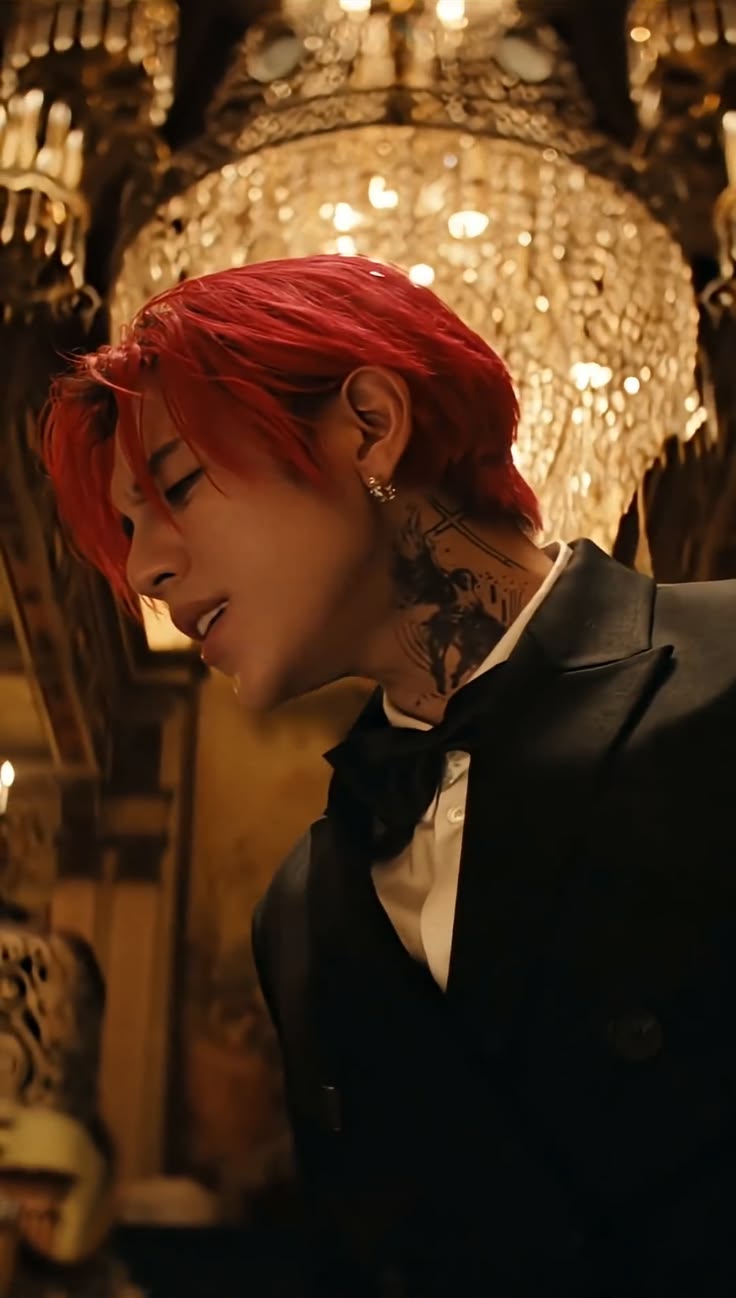
The core of IAN’s cinematic universe lies in the friction between his two primary alter-egos: MITO and Mr. Insanity. To the casual observer, these may seem like mere characters, but they are visceral representations of his lived experience with Bipolar I Disorder. MITO is the “shadow”. He is the manifestation of low-energy, depressive states — a fallen angel characterized by ink-black tears and a desperate, haunting search for love. In his visuals, MITO is often characterized by a lack of control — falling through clouds, drowning, or wandering through desolate, grey landscapes. However, the transition into his more recent work introduces us to Mr. Insanity, the antithesis to MITO’s somber weight. Mr. Insanity is the manic “technicolor” peak. He is vibrant, erratic, and dangerously charming. Where MITO is a beautifully controlled descent, Mr. Insanity is the reckless flight. This transition represents a shift from internal reflection to external expression — moving from the dark, monochromatic depths of MITO to the distorted, candy-colored madness of Dear Insanity. The brilliance of IAN’s world-building is that he doesn’t choose one over the other; he forces the listener to sit in the tension between the two.
The Feeling of the Fall
Listening to IAN for the first time feels like a beautifully controlled descent. He taps into that universal feeling of “beautiful tragedy” — the kind of music you play when the sun is coming up and you’re still awake, caught between a dream and reality. It is the sound of the “blue hour,” that transitional space where MITO’s shadows meet Mr. Insanity’s neon lights. It is in this gray area where logic fails and emotion takes over, proving that IAN understands that the most human moments are often the messiest.
The Curation: My Essential Three
If you’re new to his universe, these are the three tracks I believe define his current trajectory:
1. “Ballroom Extravaganza” – It’s grand, it’s theatrical, and it feels like the end of the world in the best way possible. There’s a specific kind of dark romanticism here that makes you feel like the protagonist of a movie you haven’t seen yet. The orchestration doesn’t just back the vocals, it competes with them, creating a sonic tug-of-war that mirrors MITO’s internal conflict. It is the definitive anthem for those who find beauty in the breakdown.
2. “Don’t Go Insane” – A masterclass in how to use a bassline to create tension. Here, IAN leans into the “gritty” side of his sound, utilizing a pulsating rhythm that mimics a racing heartbeat. This track serves as the official introduction to the Mr. Insanity era — it is fast, infectious, and slightly unhinged. It proves that IAN can make even the most uncomfortable psychological states feel danceable, distilling the “noir” aesthetic into four minutes of high-contrast sound.
3. “Peanut Butter & Tears” – This is where his visual storytelling and his sonic identity perfectly collide; it’s nostalgic but deeply distorted. The track explores the loss of innocence through a warped, psychedelic lens. By taking something as mundane as “peanut butter” and pairing it with the visceral imagery of “tears,” IAN highlights the duality that defines his career: the light of Mr. Insanity cannot exist without the shadow of MITO.
The Final Frame
DPR IAN is a reminder that the most compelling art isn’t always the most comfortable. As he continues to expand his cinematic universe, he challenges us to stop merely listening to music and start observing it. Whether he is Christian Yu the director, MITO the fallen, or Mr. Insanity the manic, he remains one of the few artists today truly capable of building a world that feels as real as our own — only a lot more vivid, and infinitely more honest. In the end, he is his own muse, proving that the most profound stories are the ones we tell about our own contradictions.
Leave a Reply